

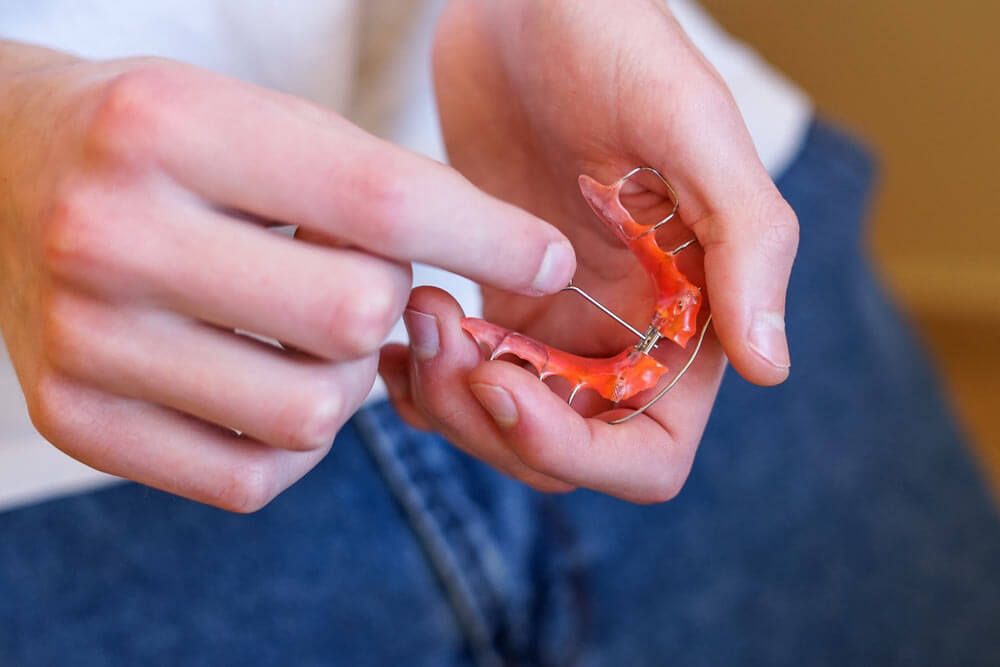

Palatal expanders play an essential role in orthodontics by gently widening a child’s upper jaw at the crucial time when bone growth is still flexible. This expanding process creates more room for permanent teeth, improves bite function, and enhances the airway to support better breathing.
Children as young as 5 years old can begin palatal expansion. The typical age range is between 7 and 12, but cases can extend to adults in varying circumstances.
Palatal expanders work by gradually widening the upper arch, allowing teeth to fit appropriately and helping the upper and lower jaws meet correctly.
Parents receive simple, step-by-step guidance on how to activate the expander at home, ensuring steady and controlled widening.
Children may feel mild pressure for a few seconds after activation, but discomfort typically fades quickly and is not considered painful.
The expansion phase usually takes a few weeks, but the device stays in place for around a year to stabilize and strengthen the new bone structure.
We begin with a detailed exam, digital imaging, and bite analysis to determine if expansion is needed. This helps us evaluate jaw width, airway development, and overall facial growth patterns.
A custom-fabricated palatal expander is securely fitted to the upper molars. The appliance is designed for comfort while delivering precise, controlled expansion.
Parents or patients gently turn the expander key as instructed to gradually widen the upper jaw. We monitor progress closely with scheduled check-ins to ensure safe, effective expansion.
Once the desired width is achieved, the expander remains in place to allow new bone to stabilize. We then transition into the next phase of orthodontic treatment as needed.
These symptoms signal that your child could benefit from palatal expansion to promote healthier dental and airway development.

Patients should brush carefully around the appliance and use rinses to keep the palate clean and free of food debris. Patients may also use a Waterpik to remove trapped food.

Sticky, chewy, or hard foods should be avoided to prevent damaging the appliance.

Families should reach out if they notice loose bands, irritation, or difficulty activating the device.
Most patients feel mild pressure after activation, but not actual pain. The sensation usually fades within minutes.
Most expanders stay in place for 12 months. This includes both active expansion and stabilization time.
Yes, but sticky and hard foods should be avoided. Soft foods and careful brushing help keep the appliance in good condition.
The gap between the front teeth may not always close on its own. However, Dr. Feusier can address this with limited braces.
We recommend a Waterpik while adjusting to these phases of treatment.
Missing an activation occasionally is not harmful, but consistency is essential. Contact our office if you’re unsure how to proceed.